


























ElfVaping Blog, Vape News
How to Evaluate Disposable Vape Brands for Wholesale in 2026: A Retail Buyer’s Guide
For wholesale buyers in 2026, the best disposable vape brand is not simply the one with the biggest puff number, the brightest screen, or the lowest unit price. A useful buying decision starts with a different question: which products can be legally sold in my target market, consistently reordered, authenticated, explained to customers, and turned into healthy inventory rather than dead stock?
This guide is designed for adult-only vape retailers, distributors, and purchasing teams that need a repeatable way to compare disposable and rechargeable vape product families before committing to a purchase order. It focuses on wholesale disposable vape brand evaluation: market fit, compliance evidence, product architecture, batch consistency, authenticity, stock turn, and after-sales risk. If your main task is choosing the company you buy from rather than choosing the products you stock, use our separate guide on how to find reliable vape suppliers. If you want a brand-focused shortlist after you understand the evaluation framework, see our wholesale vape brand roundup.
Important: vaping products are age-restricted and regulations differ by country. This article is a procurement and inventory-planning guide, not legal or medical advice. Buyers should verify the latest rules, notifications, taxes, flavour restrictions, packaging requirements, and waste obligations in every market where a product will be sold.
Wholesale Disposable Vape Brand Evaluation: The 9 Checks That Matter
A strong buying process separates brand popularity from purchase-order quality. A popular name can still be a poor choice if the exact SKU is not compliant in your country, is difficult to authenticate, has weak replenishment continuity, or duplicates products already sitting on your shelf. Conversely, a less familiar model can earn a place in a test order if it has clear documentation, a defined customer role, sensible economics, and reliable traceability.
| Evaluation factor | Evidence to request or verify | Common red flag |
|---|---|---|
| 1. Legal-market fit | Country-specific notification/compliance information, nicotine strength, reservoir or pod configuration, warnings and packaging | “EU compliant” used as a blanket claim without SKU- or market-level evidence |
| 2. Traceability | Manufacturer/importer details, batch or lot identification, model identifiers, documentation that matches the physical product | Packaging, invoice and product names do not match |
| 3. Product architecture | Battery, charging, refillability/reusability, coil/pod design, liquid configuration and instructions | A marketing name obscures how the device actually works |
| 4. Puff-count credibility | Test conditions, e-liquid capacity, battery/recharge behaviour and realistic usage assumptions | Puff count treated as a guaranteed lifespan |
| 5. Batch consistency | Pre-order samples, batch QC evidence, DOA/leakage handling and repeat-order consistency | Only one perfect sample is shown; no batch-level evidence |
| 6. Assortment fit | Distinct price/feature/customer role for each SKU | Too many near-identical flavours or capacities competing for the same customer |
| 7. Inventory economics | Landed cost, MOQ, case pack, expected sell-through, reorder lead time and markdown risk | Buying purely for the lowest unit cost |
| 8. Authenticity controls | Verification code/QR where offered, brand-authorized channels and consistent packaging | Unusually low price with weak provenance |
| 9. Returns and support | Written defect/shortage process, evidence requirements, response window and credit/replacement terms | No defined process after goods are delivered |
Why a “Top Disposable Vapes” List Is Not Enough in 2026
Older buying guides often ranked products mainly by puff count, flavour count, battery size, or price. Those comparisons are still useful at product level, but they are no longer sufficient for a wholesale decision. The regulatory and inventory context has changed.
In the EU, Article 20 of the Tobacco Products Directive sets specific requirements for nicotine-containing electronic cigarettes, including a maximum nicotine concentration of 20 mg/mL and a maximum 2 mL cartridge or tank volume for disposable electronic cigarettes or single-use cartridges. It also covers requirements such as child- and tamper-resistance and leakage protection. Buyers should check the exact SKU and the national implementation rather than infer legality from a product name or a seller’s generic “TPD” badge. The source text is available from EUR-Lex, Directive 2014/40/EU.
There is also a major difference between EU and UK planning. In the UK, businesses have been prohibited from selling or supplying single-use vapes since 1 June 2025. The government’s business guidance explains the reusable criteria and the obligations for leftover stock and recycling. A wholesale list that ignores this distinction can recommend the wrong product format for an entire market. See the current GOV.UK single-use vape guidance.
Finally, the EU Batteries Regulation is changing the design expectations around products that incorporate portable batteries. Article 11’s removability and replaceability requirements apply from 18 February 2027, subject to the Regulation’s scope, definitions and exceptions. Rather than making a simplistic prediction that every current device will be “banned,” wholesale buyers should ask manufacturers how future product architecture will address battery obligations and obtain specialist compliance advice for the exact product. The legal text is published in Regulation (EU) 2023/1542.
1. Start with Legal-Market Fit, Not with a Brand Name
The first filter in a retail assortment should be the market, not the logo. A model can be commercially attractive and still be unsuitable for the country where you intend to sell it. That makes the first buying question: “Can I document why this exact configuration belongs in this exact market?”
Ask for information at SKU level. The same brand may have different nicotine strengths, liquid configurations, packaging, warnings, flavours, and device formats for different countries. Do not assume that a product sold in one European market can automatically be transferred to another. National rules can add flavour restrictions, excise requirements, registration systems or other conditions on top of wider EU rules.
A practical purchase-order file should therefore connect the commercial SKU to its model identifier, nicotine strength, packaging language, traceability information and relevant compliance evidence. If the documentation describes “Model X” but the cartons arrive as “Model X Pro Max EU Edition,” stop and reconcile the identity before retail distribution.
2. Treat Traceability as a Product Feature
Traceability is not paperwork added after the buying decision; it is part of product quality. A retailer should be able to identify what was purchased, from whom, in which batch, and under which product identity. That becomes especially important when two devices look almost identical but were manufactured for different markets.
Before scaling an order, check whether the manufacturer/importer information, batch marking, SKU naming and packaging remain consistent across sample units, commercial cartons and invoices. For brands that provide authentication systems, test them on multiple samples rather than one hand-picked unit. If a QR code or security code exists, it should lead to a plausible brand-controlled verification flow rather than an unrelated landing page.
This is also why the cheapest quotation is not automatically the cheapest inventory. A small saving disappears quickly if stock must later be quarantined because its origin or market status cannot be verified.

3. Compare Product Architecture Before Comparing Puff Numbers
Wholesale catalogues increasingly use large headline puff counts, smart displays, multiple modes, mesh coils and rechargeable batteries to differentiate products. Those features can matter, but they should be translated into a retail use case.
For example, a screen may reduce uncertainty if it communicates battery or liquid status clearly; it can also add cost and complexity without changing the customer’s core need. A rechargeable battery can make a larger liquid system practical, but “rechargeable” does not mean “reusable” under every regulatory definition. Coil configuration can influence vapour output and perceived flavour, but the practical purchasing question is whether performance remains consistent across a batch and across the intended life of the device.
Create a short architecture sheet for each shortlisted SKU: liquid system, battery and charging method, coil/pod arrangement, controls or modes, dimensions, nicotine variants, and what the customer must replace or discard. This makes cross-brand comparisons much more useful than simply ranking the largest advertised number.
4. Use Puff Count as a Comparison Variable, Not a Promise
Puff count is one of the most visible numbers in this category and one of the easiest to misunderstand. It is normally generated under defined test conditions; real use varies with puff duration, airflow, power mode, coil behaviour, charging habits and user technique. A “40,000 puff” label should therefore not be interpreted as a guarantee that every customer will achieve exactly 40,000 inhalations.
For wholesale comparison, ask three questions:
- What test method supports the claim? A number is more useful when the conditions are disclosed.
- Does the hardware and liquid configuration make the claim internally plausible? Compare the claim with the disclosed architecture rather than with another label.
- How does the device perform late in its usable cycle? A product that starts strongly but degrades sharply can generate complaints even if its headline specification looks impressive.
This approach also prevents the assortment from becoming a race toward ever-larger numbers. Retail buyers should stock a reason to choose each SKU, not just a bigger numeral on the box.
5. Test Batch Consistency Before You Scale the Order
A wholesale decision should be based on repeatability. One excellent sample proves that one sample can work; it does not prove that a commercial batch will behave the same way.
For a trial order, record a small but useful quality log. Track units that arrive dead, visible leakage, charging issues, activation problems, screen or indicator faults, flavour inconsistency, packaging damage and any mismatch between ordered and received variants. When you reorder, compare the new batch with the first rather than starting from zero.
The goal is not to publish a dramatic “failure score.” It is to build internal evidence that supports future buying decisions. A buyer who knows which product families remain consistent across several replenishment cycles can allocate inventory with more confidence than one who relies on a one-time review.
6. Build an Assortment, Not a Collection
A common retail mistake is stocking too many products that solve the same customer problem. Ten similar high-capacity fruit-ice devices can look like variety to a buyer but behave like one oversized inventory position in the stockroom.
Instead, give every SKU a job. Your categories will differ by market, but a simple assortment map can include:
- Core proven line: products with established repeat demand and stable replenishment.
- Value position: a clear entry price without sacrificing required compliance or traceability.
- Feature-led position: products chosen for a meaningful screen, mode, coil or format difference.
- Market-specific compliant position: configurations selected specifically for local rules.
- Test position: limited quantities of new products whose sell-through is not yet proven.
Assortment planning also reduces cannibalisation inside your own shop. If two SKUs have the same customer, price band, flavour profile and device architecture, ask whether you really need both. Shelf space and working capital are finite.
7. Compare Landed Margin and Stock Turn Together
Wholesale pricing should never be evaluated without inventory velocity. A product with a very high theoretical gross margin can produce a poor real return if it moves slowly, requires markdowns, or ties up cash for months.
Use a simple landed-cost model that includes unit price, shipping, duties or taxes where applicable, payment costs, expected defect allowance and any local compliance or waste-management costs. Then compare that cost with a realistic selling price and expected weekly or monthly sell-through.
| Metric | Why the buyer needs it | Better question |
|---|---|---|
| Unit purchase price | Starting cost only | What is the landed cost after all order-level costs? |
| Gross margin % | Shows potential profit per sale | How many units are likely to sell before markdown? |
| MOQ/case pack | Determines cash commitment | Can I test demand without overbuying? |
| Reorder lead time | Affects safety stock | How much stock is needed to avoid both stockouts and overstock? |
| SKU overlap | Reveals internal competition | Does this product add a new customer reason to buy? |
Our broader wholesale vape purchase best-practices guide goes deeper into order planning. For this brand-evaluation page, the key point is that a strong product is one that earns its place in the inventory system, not merely one that looks attractive on a price list.
8. Use Brand and Model Families as Assortment Roles, Not Absolute Rankings
ELFVAPING carries multiple product families from brands including Vapsolo, RandM, WASPE and Bang Box. Rather than declaring one brand universally “best,” a retailer can use those families as examples of how to build a shortlist. Specifications change frequently, so always verify the current product page and target-market configuration before ordering.
| Brand / product family | Possible assortment role | What a wholesale buyer should verify | Useful internal resource |
|---|---|---|---|
| Vapsolo | Feature-led rechargeable/high-capacity comparison set | Exact liquid configuration, nicotine option, charging architecture, target-market compliance and current model identity | Browse Vapsolo products |
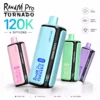
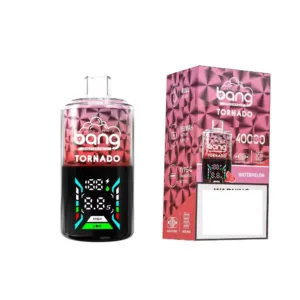
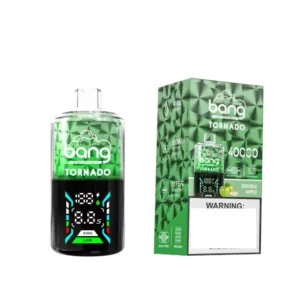
| RandM / Tornado families | Established brand-recognition comparison set | Authentication, exact model generation, flavour/strength configuration, packaging and batch identity | RandM product category |
| WASPE | Alternative feature/capacity set for controlled testing | Current SKU architecture, market documentation, sample consistency and overlap with existing lines | WASPE product category |
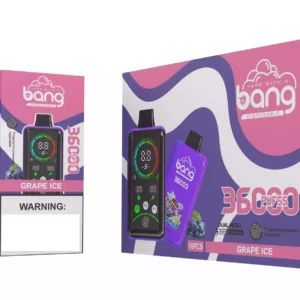
| Bang Box | High-capacity / multi-feature test set where lawful | Whether the exact device configuration is lawful for the intended market, plus batch and traceability evidence | Bang Box bulk-buying guide |
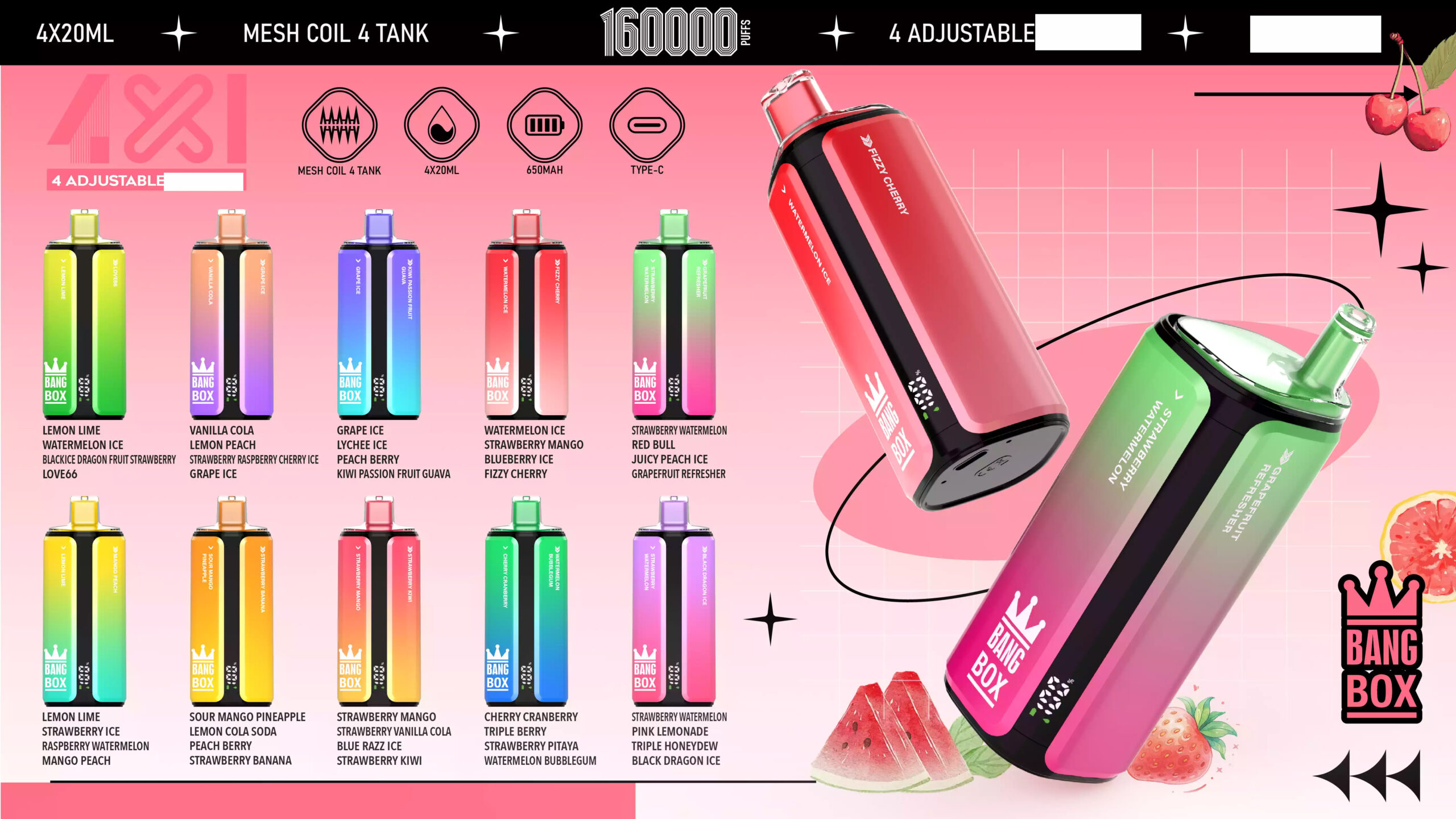
The important distinction is between a brand shortlist and a purchase approval. A name can enter the shortlist because it matches customer awareness or a desired product role. The exact SKU should only enter the order after it passes the market, documentation, quality and economics checks.
9. Make Authenticity and Defect Handling Part of the Purchase Order
Counterfeit risk is not solved by adding the phrase “100% original” to a quotation. Buyers need a process. Where a brand offers verification, test it. Keep purchase records and batch identifiers. Compare packaging details against current brand material. Be cautious when a price is materially below normal market levels without a credible explanation.
At the same time, agree how genuine defects and shortages will be handled. Define the reporting window, photos or video evidence required, whether units receive credit or replacement, and how shortages are reconciled. A written process reduces arguments after delivery and gives the purchasing team a realistic view of the product’s total cost.
EU vs UK: A 2026 Market Check Before You Order
| Market checkpoint | What it means for wholesale planning in 2026 |
|---|---|
| EU nicotine e-cigarettes | Check Article 20 TPD requirements including the 20 mg/mL nicotine ceiling and 2 mL cartridge/tank rule for disposable electronic cigarettes or single-use cartridges, plus national rules and notification requirements. |
| EU country differences | Flavour, tax, registration, packaging and other rules can differ. Treat “EU compliant” as the start of due diligence, not the end. |
| EU Batteries Regulation | Review future architecture and compliance planning. Article 11 applies from 18 February 2027, subject to scope and exceptions; verify how it affects the specific device. |
| United Kingdom | Do not plan single-use vape retail stock: sale and supply of single-use vapes has been prohibited since 1 June 2025. Use the current government definition when assessing whether a product is reusable. |
This is one reason a single global “top vape” ranking can mislead buyers. The same device format can have completely different commercial relevance in different jurisdictions.
Environmental and WEEE Responsibilities Belong in the Buying Decision
Vape products contain electrical components and batteries, so end-of-life handling is not an optional marketing extra. Retailers should understand the take-back, storage and recycling obligations in their market and consider how a product’s design affects collection and waste handling.
The following official UK OPSS video, linked from GOV.UK’s vape business guidance, explains retailers’ WEEE take-back responsibilities. The specific legal duties shown are UK-focused, but the operational lesson is broader: end-of-life handling should be designed into a retail programme before stock reaches the shelf.
A Practical 12-Point Checklist Before a Wholesale Vape Purchase Order
- Define the country and sales channel. Never approve the product before defining where it will be sold.
- Freeze the exact SKU identity. Record model name, variant, nicotine strength and packaging version.
- Verify market documentation. Match documents to the exact product rather than the brand in general.
- Check architecture. Record liquid, battery, charging, coil/pod and reusability/refillability details.
- Review traceability. Manufacturer/importer, batch/lot and product identifiers should be clear.
- Test authenticity controls. Use the brand’s verification method where one is available.
- Sample more than one unit. Look for consistency, not a single showcase sample.
- Model landed cost. Include more than the quoted unit price.
- Assign an assortment role. State why this SKU deserves shelf and working-capital space.
- Start with a controlled quantity. Where commercially possible, validate sell-through before scaling.
- Agree defect and shortage handling. Put the process in writing.
- Set a review date. Recheck regulations, stock turn and batch performance before the next large reorder.
Frequently Asked Questions
What should a retailer check before stocking a disposable vape brand?
Start with the exact product’s legal-market fit, traceability and documentation. Then assess architecture, realistic performance claims, batch consistency, authenticity controls, landed economics, assortment role and the returns process. Brand awareness can help demand, but it should not bypass SKU-level due diligence.
Are high-puff disposable vapes automatically legal to sell in the EU?
No. A high puff count does not determine legality by itself. For nicotine-containing electronic cigarettes, EU TPD Article 20 includes requirements such as a maximum 20 mg/mL nicotine concentration and a maximum 2 mL cartridge or tank size for disposable electronic cigarettes or single-use cartridges. National requirements can also differ. Verify the exact configuration and market before stocking it.
How should wholesale buyers compare puff counts between brands?
Treat the number as a test-based comparison claim rather than a guaranteed customer lifespan. Ask about test conditions and compare the figure with the device architecture, liquid configuration, battery/recharging behaviour and consistency late in the device’s usable cycle.
Is a rechargeable vape considered reusable in the UK?
Not necessarily. Current UK government guidance says a vape must satisfy the reusable definition; being rechargeable alone is not enough. Since the single-use vape ban has been in force since 1 June 2025, UK buyers should check the current government criteria before stocking any product described as reusable.
How many SKUs should a retailer test first?
There is no universal number. The better rule is to choose a quantity that can generate meaningful sell-through and defect data without creating excessive dead-stock risk. A small shop may need a tighter test than a multi-store chain. Test distinct assortment roles rather than dozens of near-identical variants.
What documents should I request from a wholesale vape source?
The exact list depends on the market and your role in the supply chain. At minimum, buyers usually need clear SKU identity, manufacturer/importer and traceability information, relevant compliance or notification evidence, packaging/label details, and commercial records that connect the physical batch to the order. Ask local compliance professionals where the law requires additional documents.
Should I choose the cheapest vape brand to maximize margin?
No. Unit cost is only one part of margin. Slow sell-through, defects, markdowns, poor replenishment and compliance problems can erase a nominal price advantage. Compare landed cost and expected stock turn together.
Conclusion: Buy the Evidence, Not the Ranking
The most useful wholesale vape buying process in 2026 is not a permanent ranking of “number one” brands. It is a repeatable system that asks whether each exact SKU is lawful for the target market, traceable, understandable, consistent, commercially distinct and economically sensible.
Use brand names such as Vapsolo, RandM, WASPE or Bang Box to build a shortlist, then make the final purchase decision at SKU and batch level. That approach protects working capital, reduces overlap, makes compliance checks easier, and gives your team a better reason for every product that reaches the shelf.
If you are now moving from product selection to partner due diligence, continue with our reliable vape supplier checklist. If you already have a supplier and are planning order quantities and purchasing controls, use our best practices for wholesale vape purchases.
Industry Knowledge Point: The Paradigm Shift in Vapor Delivery
Recent market data indicates a 22% shift toward devices utilizing sub-ohm mesh coil architecture. Unlike traditional wire configurations, modern mesh elements provide a larger surface area for heating the pre-filled formula. This results in superior thermal distribution, preventing dry hits, extending battery efficiency, and ensuring a consistent sensory profile from the first draw to the depletion of the reservoir.
1. Market Dynamics and Regulatory Compliance in Europe
Distributing disposable vapes within the European Union necessitates strict adherence to standardized manufacturing and safety protocols. Commercial viability is directly tied to regulatory compliance. Devices distributed through authorized channels must meet CE (Conformité Européenne) and RoHS (Restriction of Hazardous Substances) certifications. These certifications mandate that electronic components are free from restricted heavy metals and that the internal lithium-ion power cells meet rigorous thermal stability benchmarks. Furthermore, local directives dictate strict limits on internal reservoir capacities and mandate clear consumer warning labels. We ensure that our entire portfolio of disposable vapes aligns with these regional frameworks, mitigating legal and operational risks for our wholesale partners across Germany, Belgium, and the broader EU zone.2. Empirical Testing and Quality Assurance Methodology
To establish absolute trust and reliability in the products we supply, ELFVAPING relies on a rigorous, data-driven Quality Assurance (QA) framework. We do not simply pass on manufacturer specifications; we validate them through empirical testing protocols.Pneumatic Draw Simulation
Using automated mechanical inhalation simulators, we sample 2% of incoming batches to verify the advertised puff counts. Devices are tested under standard atmospheric pressure, drawing 50ml of vapor per 3-second interval, ensuring the internal capacity aligns accurately with the manufacturer's claims.
Voltage Retention Analysis
The lithium-ion cobalt (LiCoO2) batteries integrated into our hardware undergo multi-stage multimeter testing. We measure voltage drop-off during continuous operation to ensure the battery sustains optimal wattage until the formula reservoir is entirely depleted.
Thermal Stability & Leak Prevention
Devices are subjected to rapid temperature fluctuations (-10°C to 45°C) in controlled environmental chambers to simulate transit conditions. This validates the integrity of the silicone seals, guaranteeing that no seepage occurs prior to consumer unboxing.
3. Elite Brands Defining the European Landscape
Strategic procurement requires partnering with brands that invest heavily in Research and Development. The hardware landscape is dominated by manufacturers prioritizing ergonomic design, advanced heating elements, and consistent aromatic output. Below is an analytical breakdown of top-tier disposable vape brands available for bulk procurement.Bang Box Series
High-Capacity Output Models
Engineered for extended lifespans, Bang Box devices utilize integrated rechargeable Type-C interfaces alongside 850mAh base cells. Their proprietary mesh coil systems operate at 1.0 ohms, generating dense vapor clouds while preserving the integrity of their diverse aromatic profiles. This line is highly recommended for consumer demographics seeking longevity.
RandM Tornado
Adjustable Airflow Architecture
RandM Tornado differentiates itself through customizable pneumatic controls. The rotating base valve allows users to physically restrict or open the air intake, transitioning the device seamlessly from a Mouth-To-Lung (MTL) to a Restricted Direct-Lung (RDL) draw. Their RGB LED actuation indicators also serve as diagnostic tools for battery health.
Elf Box
Compact Efficiency Standard
Setting the industry standard for form factor, the Elf Box utilizes a unibody polycarbonate chassis that maximizes internal volume for the formula reservoir while maintaining a highly pocketable footprint. Powered by an intelligent firing chipset, it delivers a precise 3.6V output, ensuring the sensory delivery remains unchanged even at 10% battery capacity.
4. Technical Specifications Comparison
For inventory managers evaluating the technical merits of different disposable vape lines, the following matrix outlines the core engineering parameters that dictate device performance and consumer satisfaction.5. The Economics of Bulk Sourcing with ELFVAPING
Supply chain efficiency is the bedrock of profitable retail. By centralizing your procurement strategy through ELFVAPING, retailers unlock significant logistical and financial advantages. As the foremost authority and largest online wholesale platform for disposable vapes in the Netherlands, Germany, Belgium, France, Portugal, Spain, Poland, and Denmark, we have optimized the importation and distribution pathways.Optimize Your Retail Inventory Today
Partner with the leading European distributor. Secure top-tier hardware, benefit from our exceptional QA processes, and capitalize on highly competitive wholesale rates.
Purchase wholesale disposable vapes on our centralized platform at ELFVAPING.
6. Sustainability Protocols and Environmental Responsibility
The proliferation of high-volume electronics necessitates a strict approach to environmental stewardship. Modern disposable vape brands are increasingly designing their hardware to align with the European Union's Waste Electrical and Electronic Equipment (WEEE) Directive. ELFVAPING exclusively champions manufacturers implementing sustainable design choices. This includes the transition toward biodegradable exterior polymers and modular internal architectures that allow specialized recycling facilities to easily extract the lithium-ion power cells from the copper and structural plastics. Educating the end-consumer on proper disposal channels remains a critical responsibility for retailers across the EU.7. Expert FAQs: Navigating Disposable Vape Procurement
QWhat is the Minimum Order Quantity (MOQ) for activating a wholesale account?
At ELFVAPING, we have structured our procurement model to support businesses of all scales. Our MOQ is set at an exceptionally accessible 10 pieces. This allows for rapid inventory diversification and localized market testing.
QWhich regions are fully supported by your logistical network?
We operate as the premier wholesale platform specifically catering to the Netherlands, Germany, Belgium, France, Portugal, Spain, Poland, and Denmark. Our localized payment gateways (such as iDEAL for the Netherlands and Bancontact for Belgium) facilitate frictionless transactions.
QHow do you verify the technical reliability of the devices supplied?
Our robust Quality Assurance program involves batch sampling using pneumatic draw simulators, multimeter diagnostics for battery health, and thermal stability checks. This ensures every product performs precisely to its advertised engineering specifications.
QAre there scalable pricing models for higher volume acquisitions?
Yes, while our MOQ begins at 10 units, our tiered pricing algorithm automatically applies significant discounts as your order volume increases, ensuring high-capacity distributors maximize their retail margins.
40000 Puff Vapes
WASPE AIVIOU 40000 Puffs Double Tastes LED Screen Bulk Buy Rechargeable Disposable Vapes Wholesale
20000 Puff Vapes
Bang Box 20000 Puffs Vape Rechargeable Bulk Buy Disposable Vape Wholesale
60000 Puff Vapes
WASPE AIVIOU 60000 Puffs 3 Tastes in 1 LED Screen Bulk Buy Rechargeable Disposable Vapes Wholesale
15000 Puff Vapes
RandM Tornado 15000 Puffs Bulk Buy Rechargeable Disposable Vape Wholesale
100000 Puff Vapes
BANG LEADER STOLL 100K Four Tastes 100000 Puffs Quad Mesh Coil Disposable Vapes Wholesale Bulk Buy
100000 Puff Vapes
WASPE Four Tastes 100K Puffs Bulk Buy Rechargeable Disposable Vapes Wholesale
18000 Puff Vapes
JNR Falcon X 18000 Puffs Dual Mesh Digital Display Bulk Buy Rechargeable Disposable Vapes Wholesale
20000 Puff Vapes
Gazzbar Rocket 20000 Puffs Dual Mesh LED Display Bulk Buy Rechargeable Disposable Vapes Wholesale