




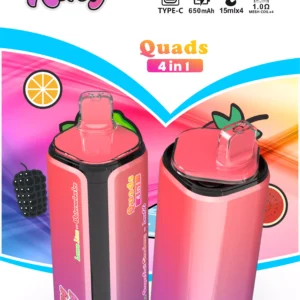

















Disposable Vapes
Vape Coil Types Explained: Mesh, Ohms & Wattage Guide
Vape coil types are easiest to understand by separating four things: the heating-element design (wire or mesh), the metal used, the coil resistance in ohms, and the airflow/power range the manufacturer designed it for. Those factors work together. A 0.6Ω coil from one family can have a very different recommended wattage from a 0.6Ω coil made for another device, so resistance alone is not a safe wattage calculator.
This guide explains the differences without treating one coil as universally “best.” It is written for adult users of refillable pods, tanks and regulated vape devices who want to identify a compatible replacement coil, understand a vape coil wattage chart, or work out whether a coil is intended for MTL, RDL or DTL use. If your device has a sealed pod or a fixed internal coil, follow the pod or device maker’s instructions instead of trying to replace the heating element itself.
Vape coil types at a glance
| Coil type | How it heats | Typical use | Main strengths | What to check |
|---|---|---|---|---|
| Round-wire coil | A length of resistance wire formed into a spiral | MTL, RDL or DTL depending on the coil head | Simple, predictable design; widely used | Exact coil family, resistance and rated wattage |
| Mesh coil | A perforated or woven metal strip presents a broad heating area | Common across modern pod and sub-ohm coil families | Fast, relatively even heating and a large contact area | Mesh does not make different coil families interchangeable |
| Multi-coil head | Two or more heating elements share the load | Usually higher-airflow designs | More active heating area at a given moment | Often needs more power and e-liquid than an MTL coil |
| Ceramic-supported coil | Heating element works with a ceramic structure or wick system | Selected proprietary pods and tanks | Can offer a different heat/wicking profile | Use only the cartridge/coil specified for the device |
| Rebuildable coil | User-installed wire/mesh and wick in an RTA/RDA/RDTA | Advanced rebuildable atomizers | Highly configurable | Requires electrical knowledge, resistance verification and appropriate hardware |
The table describes construction, not a universal performance ranking. Modern manufacturers may combine mesh, multiple mesh sections, proprietary wick layouts and different alloys inside one replaceable coil head.

What is a vape coil?
A vape coil is the heating assembly inside the atomizer, tank or pod. In a replaceable coil head, the metal heating element sits next to a wick—commonly cotton—that draws e-liquid from the reservoir. When a regulated device supplies power, the element warms the liquid held in the wick so an aerosol can form. The “coil” sold as a replacement part therefore usually includes more than a bare spiral of wire: it can include the heating element, wick, metal housing, seals and electrical contacts.
That distinction matters when shopping for replacements. Two coils can both say “0.8Ω” and still have different dimensions, contacts, airflow paths and wattage ratings. The first compatibility question is not “what ohm do I want?” but “which coil family or pod does my exact device accept?” Manufacturer documentation should answer that before resistance, wattage or vaping style are considered.
1. Round-wire coils: the traditional design
A traditional coil uses resistance wire shaped into a helix. The surrounding wick delivers e-liquid to the hot metal surface. Round-wire designs remain useful because they can be engineered across a broad resistance range, from relatively low-resistance direct-lung heads to higher-resistance mouth-to-lung heads.
“Single,” “dual,” “triple” and “quad” describe the number of active heating elements, not the metal type or resistance by themselves. Adding elements changes the total electrical and thermal behavior of the assembly. That is why a dual-coil head should be treated as a complete manufacturer-designed component rather than as two copies of a single-coil head with a wattage value guessed from the label.
2. Mesh vape coils: more surface area, different geometry
Instead of a thin round wire, a mesh coil uses a patterned sheet or strip of metal. The geometry gives the wick a broad heating surface, which is one reason mesh is now common in both refillable pods and high-airflow tanks. In a well-designed coil head, spreading heat across a larger area can help produce consistent vaporization and reduce concentrated hot spots.
Mesh, however, is a construction style rather than a guarantee of stronger flavour, bigger clouds or longer life. Performance still depends on the mesh alloy, resistance, wick, airflow, liquid, power setting and how the coil is used. An 0.8Ω MTL mesh pod and a 0.2Ω DTL mesh coil are both “mesh,” yet they are designed for very different airflow and power levels.
For a practical look at how manufacturers use multiple mesh sections in disposable hardware, see our guide to dual-mesh technology and heating behaviour and our dual-mesh disposable vape comparison. Those articles cover a different page intent; this page remains the owner for general vape coil types, resistance and selection.
3. Ceramic and ceramic-supported coil systems
“Ceramic coil” can describe several constructions. Some use porous ceramic as part of the wicking or support structure; others pair a metal heating element with ceramic material. Because the term covers different proprietary designs, it is better to read the manufacturer’s specification than assume every ceramic cartridge behaves the same way.
The same compatibility rule applies: a ceramic pod made for one platform is not interchangeable with another merely because the resistance is similar. Treat the cartridge or coil family name as the first filter and the resistance as the second.
4. Rebuildable coils: a separate advanced category
Rebuildable atomizers such as RTAs, RDAs and RDTAs let the user install a heating element and wick rather than drop in a sealed factory coil head. You may see round wire, Clapton-style wire or mesh used in these systems. They offer more control, but they also move electrical and assembly decisions from the manufacturer to the user.
This article does not provide mechanical-mod or coil-building instructions. Anyone using rebuildable hardware needs to understand resistance measurement, battery and device limits, short-circuit risks and the specific atomizer’s documentation. Beginners who only need a replacement part should normally stay within the factory coil or pod family listed for their regulated device.
Vape coil materials: Kanthal, Nichrome, stainless steel, nickel and titanium
The metal in the heating element affects resistance and how it responds to power. The most common labels you will encounter include Kanthal/FeCrAl, nichrome/NiCr and stainless steel. Some temperature-control systems also use nickel (Ni200) or titanium.
| Material | Where you commonly see it | Mode considerations | Practical note |
|---|---|---|---|
| Kanthal / FeCrAl | Many factory coils and rebuildable wire products | Normally used in variable-wattage/power mode | Stable, familiar choice for regulated wattage devices |
| Nichrome / NiCr | Factory mesh and wire coils in many product families | Usually variable-wattage/power mode | Often selected for relatively quick ramp-up |
| Stainless steel / SS316L | Factory coils and rebuildable wire | Can be used in wattage mode; some compatible regulated devices also support SS temperature control | Check both coil and device specifications |
| Nickel / Ni200 | Specialised temperature-control coils | Temperature-control use on compatible hardware | Do not treat a Ni200 coil as ordinary wattage wire |
| Titanium | Specialised temperature-control builds/coils | Temperature-control use on compatible hardware | Follow the hardware and coil maker’s instructions |
For factory coil heads, you rarely need to calculate the electrical properties of the metal yourself. The useful information is already on the coil or manufacturer page: compatibility, resistance and recommended operating range. For example, current Geekvape B Series documentation lists several mesh resistances with distinct suggested power ranges, illustrating why “mesh” or “0.6Ω” alone is not enough to choose a setting. See the manufacturer’s B Series coil page for a concrete example.

Vape coil resistance and wattage: how to read the numbers
Resistance is measured in ohms (Ω). On a regulated vape, the device reads the installed coil resistance and supplies power according to the selected mode and its safety limits. Lower resistance often appears in higher-power, higher-airflow DTL coils, while higher resistance is common in lower-power MTL coils. That pattern is useful for orientation, but it is not a universal wattage formula.
If you searched “what wattage vape coils can I use with my device,” use this order: identify the exact device → find its compatible coil/pod family → choose a resistance offered within that family → use the wattage range printed on the coil or stated by the manufacturer. Do not choose a random coil because its ohm value looks similar.
A practical vape coil wattage chart
| What you know | What it can tell you | What it cannot safely tell you | Next check |
|---|---|---|---|
| Only the resistance, e.g. 0.6Ω | General electrical resistance of the coil | The exact ideal/safe wattage for every 0.6Ω coil | Find the exact coil model and printed range |
| Coil family + resistance | Which replacement variant you have | Whether it fits a different tank from the same brand | Check the official compatibility list |
| Printed wattage range, e.g. X–Y W | The manufacturer’s intended power window | Your personal preferred point inside the window | Begin near the lower part of the rated range and adjust within it |
| Device maximum wattage | Upper output capability of the device | That every coil can be run at that maximum | Use the coil’s lower rated limit, not the device maximum, as the starting reference |
| MTL/RDL/DTL label | Intended draw/airflow style | Physical compatibility | Confirm coil/pod family and device support |
This is more useful than a generic “ohm-to-watt” chart because commercial coil heads are engineered systems. Vaporesso’s current coil-selection guidance similarly recommends matching the coil to the device and intended draw rather than treating resistance in isolation; see its coil selection guide.
Sub-ohm coils versus higher-resistance coils
A sub-ohm coil has a resistance below 1.0Ω. In modern regulated devices, many low-resistance coils are designed for RDL or DTL use, with more airflow and higher power than classic MTL setups. They may consume more e-liquid and battery energy because more liquid is vaporized per puff.
Higher-resistance coils—often around or above 1.0Ω—are common in tighter MTL systems that use less power and produce less aerosol per puff. But the old shortcut “below 1Ω equals DTL, above 1Ω equals MTL” is no longer reliable enough on its own. Modern pod families include sub-ohm MTL/RDL options, and airflow design can change how a given resistance feels.
MTL, RDL and DTL: match the coil to the draw
MTL (mouth-to-lung) uses a tighter draw and usually lower power. RDL (restricted direct-lung) sits between a tight MTL draw and a fully open DTL draw. DTL (direct-to-lung) uses more airflow and is commonly paired with lower-resistance, higher-power coils.
The coil, airflow and e-liquid need to work as a system. A high-power DTL coil fed by very restricted airflow can run hotter than intended; a low-power MTL coil in an airflow setting designed for a large DTL draw can feel weak and diluted. When a coil family offers several resistances, the manufacturer’s MTL/RDL/DTL label is often more informative than resistance alone.
How to choose the right vape coil
Use the following checklist in order. It prevents the most common mistake: choosing by ohms before confirming fit.
- Identify the exact device, tank or pod. Model names matter. A coil for one generation may not fit the next.
- Find the official compatible coil family. Use the product manual or manufacturer page rather than a generic compatibility claim.
- Choose your draw. Decide whether the device supports MTL, RDL, DTL or more than one style.
- Choose a resistance within that supported family. Use the manufacturer’s descriptions to compare the variants.
- Check the printed wattage range. Your regulated device must be able to operate within that range.
- Match airflow and e-liquid to the coil. Higher-power coils generally need enough airflow and adequate liquid supply to the wick.
- Prime a new replaceable coil if the manufacturer requires it. Give the wick time to saturate before applying normal power.
If your coil is compatible but the vape tastes burnt, gurgles, leaks or produces weak vapour, use our vape troubleshooting guide rather than immediately changing to a different resistance. Fit, saturation, liquid level, airflow and power settings can all cause symptoms that look like a “wrong coil.”
Does e-liquid affect which coil works best?
Yes. Wicking speed and heat load change with the liquid. High-VG liquids are thicker and are commonly paired with larger wicking ports and higher-airflow sub-ohm coils, while 50/50 liquids are widely used in lower-power pods and MTL systems. This is not an absolute rule because coil geometry varies, so the device maker’s liquid recommendations take priority.
Very sweet liquids can leave deposits on the coil and wick more quickly. Darkening liquid, muted flavour and a progressively restricted or “cooked” taste can therefore appear sooner with some formulations even when the coil has been used at the correct power.
Disposable vapes and dual-mesh coils
In a disposable or closed device, the consumer normally cannot replace the coil. The same heating principles still apply, but the manufacturer has already paired the heating element, airflow, battery control and liquid delivery. Some modern devices switch between mesh sections or use multiple mesh elements to change output or spread the heating load.
That technology should not be confused with a replaceable dual-coil tank head. If you are comparing closed-device designs, our dual-mesh disposable vape guide explains the hardware trend without suggesting that the internal coil is a user-serviceable part.
How long do vape coils last?
There is no fixed number of days or puffs that applies to every coil. Life depends on power, puff duration, frequency, liquid composition, wicking, airflow and whether the coil was saturated properly before use. A lower-power MTL coil used gently with a relatively clean liquid may remain acceptable longer than a high-power coil repeatedly heated with a very sweet liquid, but individual results still vary.
Instead of replacing a coil on an arbitrary calendar, watch for a combination of signs:
- a persistent burnt or scorched taste that remains after checking liquid level and power;
- flavour that becomes noticeably dull or distorted;
- vapour output dropping at the same setting and airflow;
- dark, heavily deposited wick/coil surfaces where they are visible;
- repeated flooding or leaking that begins after a long period of otherwise normal use;
- the device reporting an unstable resistance or a coil error—after contacts and installation have been checked.
Do not keep increasing wattage to compensate for a worn coil. If performance has deteriorated and basic checks do not resolve it, replacement with the correct compatible coil is usually the sensible next step.
Priming and maintenance: simple habits that protect the wick
A new replaceable coil should be saturated before normal use according to its instructions. For many refillable systems this means installing the coil, filling the reservoir, allowing time for liquid to reach the wick and initially operating within the lower part of the rated range. Some pods have integrated coils and may give different preparation instructions, so follow the product manual.
Keep liquid above the minimum level needed to feed the wick, avoid chain-vaping faster than the wick can resaturate, and do not run a coil above its printed range. When cleaning a tank, separate what can be rinsed from what should remain dry. Our vape cleaning guide covers routine maintenance in more detail.
Coil problem or wrong setting? Quick diagnosis
| Symptom | Possible coil-related cause | Check before replacing |
|---|---|---|
| Burnt taste | Dry/damaged wick, coil worn out, power above rating | Liquid level, saturation time, printed wattage range, airflow |
| Weak flavour/vapour | Worn coil or power below its effective range | Battery state, airflow, device mode, correct coil identification |
| Gurgling/spitback | Coil flooded or wick no longer controlling liquid well | Overfilling, condensation, seals, correct power and installation |
| Leaking | Damaged seals or a worn/flooded coil head | O-rings, fill port, tank assembly, coil seating |
| “No atomizer” / coil error | Poor contact, damaged coil or incompatible coil | Power off, reseat compatible parts, clean dry contacts, inspect for damage |
| Resistance reading changes unusually | Loose/failed coil or contact issue | Stop use and inspect the coil installation and device contacts |
Video: pods and coils explained
For readers who prefer a visual explanation, the following video from Vampire Vape’s educational series covers how pods and coils fit into a vape system. It complements the selection tables above rather than replacing the exact compatibility information for your device.
Frequently asked questions about vape coil types
What are the main types of vape coils?
The broadest construction groups are traditional round-wire coils, mesh coils, multi-element coil heads, ceramic or ceramic-supported systems, and rebuildable coils. Within each group, the metal, resistance, wick, airflow and manufacturer-rated power range determine how the coil is actually used.
Are mesh coils better than regular coils?
Not automatically. Mesh provides a broad heating area and is popular in modern pods and tanks, but “better” depends on the device, draw, liquid and preferred power level. A well-matched round-wire MTL coil can be a better choice than a low-resistance mesh coil for someone who wants a tight, low-power draw.
What wattage should I use for a 0.6 ohm vape coil?
There is no universal wattage for every 0.6Ω coil. Find the exact coil model and use the range printed on the coil or listed by its manufacturer. Different 0.6Ω coils can use different materials, mesh geometry, airflow and wick area, so the same resistance does not make them electrically or thermally identical in use.
Can I use any coil with the same resistance in my vape?
No. Physical fit, electrical contacts, airflow, coil family and device firmware all matter. Use only a coil or pod the manufacturer lists as compatible with your exact device or tank.
Which resistance is best for MTL vaping?
Many MTL systems use higher-resistance, lower-power options, but there is no single MTL resistance that works across all devices. Modern pod families may offer MTL or tight-RDL coils below 1.0Ω. Use the device maker’s draw-style and wattage guidance.
How do I know when a vape coil is burnt?
A persistent scorched taste, badly muted flavour or deteriorating vapour after you have confirmed adequate liquid and correct power can indicate a damaged or worn wick/coil. A burnt wick normally does not recover by adding more wattage.
Can cleaning make a vape coil last forever?
No. Cleaning a reusable tank can remove condensation and residue from serviceable parts, but factory coil heads contain wick material that degrades with heat and deposits. Replace a worn coil rather than relying on aggressive cleaning methods.
Bottom line: choose the coil family first, then resistance and wattage
The most reliable way to choose among vape coil types is to start with compatibility, not a generic ohm chart. Confirm the device and coil family, decide whether you want MTL, RDL or DTL airflow, select a supported resistance, and then stay within the manufacturer’s printed wattage range. Mesh, wire type and material help explain how a coil behaves, but none of those labels overrides the hardware maker’s compatibility data.
If you remember one rule, make it this: the same resistance does not mean the same coil. A 0.6Ω number is only one part of the design. Matching the complete coil head to the correct device, airflow and power range is what turns the specification into a usable setup.
For adults only. Nicotine is addictive. Always follow the device and coil manufacturer’s instructions and applicable local laws.
Industry Knowledge Point: The Paradigm Shift in Vapor Delivery
Recent market data indicates a 22% shift toward devices utilizing sub-ohm mesh coil architecture. Unlike traditional wire configurations, modern mesh elements provide a larger surface area for heating the pre-filled formula. This results in superior thermal distribution, preventing dry hits, extending battery efficiency, and ensuring a consistent sensory profile from the first draw to the depletion of the reservoir.
1. Market Dynamics and Regulatory Compliance in Europe
Distributing disposable vapes within the European Union necessitates strict adherence to standardized manufacturing and safety protocols. Commercial viability is directly tied to regulatory compliance. Devices distributed through authorized channels must meet CE (Conformité Européenne) and RoHS (Restriction of Hazardous Substances) certifications. These certifications mandate that electronic components are free from restricted heavy metals and that the internal lithium-ion power cells meet rigorous thermal stability benchmarks. Furthermore, local directives dictate strict limits on internal reservoir capacities and mandate clear consumer warning labels. We ensure that our entire portfolio of disposable vapes aligns with these regional frameworks, mitigating legal and operational risks for our wholesale partners across Germany, Belgium, and the broader EU zone.2. Empirical Testing and Quality Assurance Methodology
To establish absolute trust and reliability in the products we supply, ELFVAPING relies on a rigorous, data-driven Quality Assurance (QA) framework. We do not simply pass on manufacturer specifications; we validate them through empirical testing protocols.Pneumatic Draw Simulation
Using automated mechanical inhalation simulators, we sample 2% of incoming batches to verify the advertised puff counts. Devices are tested under standard atmospheric pressure, drawing 50ml of vapor per 3-second interval, ensuring the internal capacity aligns accurately with the manufacturer's claims.
Voltage Retention Analysis
The lithium-ion cobalt (LiCoO2) batteries integrated into our hardware undergo multi-stage multimeter testing. We measure voltage drop-off during continuous operation to ensure the battery sustains optimal wattage until the formula reservoir is entirely depleted.
Thermal Stability & Leak Prevention
Devices are subjected to rapid temperature fluctuations (-10°C to 45°C) in controlled environmental chambers to simulate transit conditions. This validates the integrity of the silicone seals, guaranteeing that no seepage occurs prior to consumer unboxing.
3. Elite Brands Defining the European Landscape
Strategic procurement requires partnering with brands that invest heavily in Research and Development. The hardware landscape is dominated by manufacturers prioritizing ergonomic design, advanced heating elements, and consistent aromatic output. Below is an analytical breakdown of top-tier disposable vape brands available for bulk procurement.Bang Box Series
High-Capacity Output Models
Engineered for extended lifespans, Bang Box devices utilize integrated rechargeable Type-C interfaces alongside 850mAh base cells. Their proprietary mesh coil systems operate at 1.0 ohms, generating dense vapor clouds while preserving the integrity of their diverse aromatic profiles. This line is highly recommended for consumer demographics seeking longevity.
RandM Tornado
Adjustable Airflow Architecture
RandM Tornado differentiates itself through customizable pneumatic controls. The rotating base valve allows users to physically restrict or open the air intake, transitioning the device seamlessly from a Mouth-To-Lung (MTL) to a Restricted Direct-Lung (RDL) draw. Their RGB LED actuation indicators also serve as diagnostic tools for battery health.
Elf Box
Compact Efficiency Standard
Setting the industry standard for form factor, the Elf Box utilizes a unibody polycarbonate chassis that maximizes internal volume for the formula reservoir while maintaining a highly pocketable footprint. Powered by an intelligent firing chipset, it delivers a precise 3.6V output, ensuring the sensory delivery remains unchanged even at 10% battery capacity.
4. Technical Specifications Comparison
For inventory managers evaluating the technical merits of different disposable vape lines, the following matrix outlines the core engineering parameters that dictate device performance and consumer satisfaction.5. The Economics of Bulk Sourcing with ELFVAPING
Supply chain efficiency is the bedrock of profitable retail. By centralizing your procurement strategy through ELFVAPING, retailers unlock significant logistical and financial advantages. As the foremost authority and largest online wholesale platform for disposable vapes in the Netherlands, Germany, Belgium, France, Portugal, Spain, Poland, and Denmark, we have optimized the importation and distribution pathways.Optimize Your Retail Inventory Today
Partner with the leading European distributor. Secure top-tier hardware, benefit from our exceptional QA processes, and capitalize on highly competitive wholesale rates.
Purchase wholesale disposable vapes on our centralized platform at ELFVAPING.
6. Sustainability Protocols and Environmental Responsibility
The proliferation of high-volume electronics necessitates a strict approach to environmental stewardship. Modern disposable vape brands are increasingly designing their hardware to align with the European Union's Waste Electrical and Electronic Equipment (WEEE) Directive. ELFVAPING exclusively champions manufacturers implementing sustainable design choices. This includes the transition toward biodegradable exterior polymers and modular internal architectures that allow specialized recycling facilities to easily extract the lithium-ion power cells from the copper and structural plastics. Educating the end-consumer on proper disposal channels remains a critical responsibility for retailers across the EU.7. Expert FAQs: Navigating Disposable Vape Procurement
QWhat is the Minimum Order Quantity (MOQ) for activating a wholesale account?
At ELFVAPING, we have structured our procurement model to support businesses of all scales. Our MOQ is set at an exceptionally accessible 10 pieces. This allows for rapid inventory diversification and localized market testing.
QWhich regions are fully supported by your logistical network?
We operate as the premier wholesale platform specifically catering to the Netherlands, Germany, Belgium, France, Portugal, Spain, Poland, and Denmark. Our localized payment gateways (such as iDEAL for the Netherlands and Bancontact for Belgium) facilitate frictionless transactions.
QHow do you verify the technical reliability of the devices supplied?
Our robust Quality Assurance program involves batch sampling using pneumatic draw simulators, multimeter diagnostics for battery health, and thermal stability checks. This ensures every product performs precisely to its advertised engineering specifications.
QAre there scalable pricing models for higher volume acquisitions?
Yes, while our MOQ begins at 10 units, our tiered pricing algorithm automatically applies significant discounts as your order volume increases, ensuring high-capacity distributors maximize their retail margins.
40000 Puff Vapes
WASPE AIVIOU 40000 Puffs Double Tastes LED Screen Bulk Buy Rechargeable Disposable Vapes Wholesale
20000 Puff Vapes
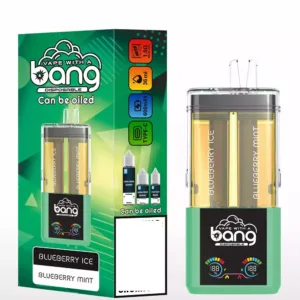
Bang Box 20000 Puffs Vape Rechargeable Bulk Buy Disposable Vape Wholesale
60000 Puff Vapes
WASPE AIVIOU 60000 Puffs 3 Tastes in 1 LED Screen Bulk Buy Rechargeable Disposable Vapes Wholesale
15000 Puff Vapes
RandM Tornado 15000 Puffs Bulk Buy Rechargeable Disposable Vape Wholesale
100000 Puff Vapes
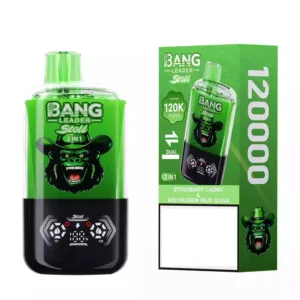
BANG LEADER STOLL 100K Four Tastes 100000 Puffs Quad Mesh Coil Disposable Vapes Wholesale Bulk Buy
100000 Puff Vapes
WASPE Four Tastes 100K Puffs Bulk Buy Rechargeable Disposable Vapes Wholesale
18000 Puff Vapes
JNR Falcon X 18000 Puffs Dual Mesh Digital Display Bulk Buy Rechargeable Disposable Vapes Wholesale
20000 Puff Vapes
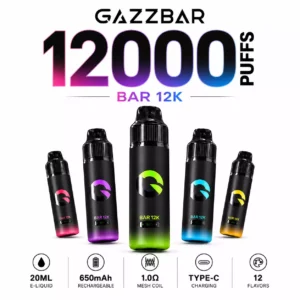
Gazzbar Rocket 20000 Puffs Dual Mesh LED Display Bulk Buy Rechargeable Disposable Vapes Wholesale