
























ElfVaping Blog, Vape News
Vaping Laws in Germany 2026: TPD, Age, Tax & Retailer Rules
Quick answer: vaping products are regulated, but vaping itself is not generally banned across Germany. In 2026, retailers need to separate three questions that are often mixed together: whether a product configuration may be placed on the German market, whether it may be sold to a particular customer, and where it may be used. For nicotine-containing disposable e-cigarettes and disposable cartridges, German law limits the liquid reservoir to 2 ml and nicotine concentration to 20 mg/ml; nicotine refill containers are limited to 10 ml. Sales are restricted to adults aged 18+, EU-CEG notification rules apply, the 2026 excise rate for tobacco substitutes is €0.32 per ml, and since 1 July 2026 affected sales outlets must provide take-back for used e-cigarettes under the amended electrical-equipment rules.
This guide explains the vaping laws in Germany from a retailer and compliance perspective. It was substantially reviewed on 18 August 2026 against current German statutes and federal authority guidance. It is informational, not legal advice, and it does not certify any particular SKU as compliant.
| Topic | Germany rule in 2026 | Retailer implication |
|---|---|---|
| Minimum age | 18+ | Do not offer or supply e-cigarettes to children or adolescents; the youth-protection rule also covers nicotine-free e-cigarettes. |
| Nicotine strength | Maximum 20 mg/ml | Check the exact German-market product and packaging, not a global supplier page. |
| Nicotine disposable/cartridge reservoir | Maximum 2 ml | A high-capacity global disposable configuration cannot simply be assumed to be lawful for German retail. |
| Nicotine refill container | Maximum 10 ml | Verify bottle size and nicotine concentration together. |
| Product notification | EU-CEG notification, generally six months before first placing on the market | Manufacturers/importers carry the notification duty; retailers should obtain enough product identity and documentation to avoid stocking unnotified or mismatched SKUs. |
| Excise tax | €0.32/ml from 1 Jan 2026 for substitutes for tobacco | Tax status is a separate compliance check from TPD-style product limits. |
| Public use | Federal restrictions expressly include e-cigarettes in covered federal facilities, public transport and railway passenger stations | State law, designated areas and house rules can add further restrictions. |
| Used-device take-back | Expanded retailer take-back applies from 1 Jul 2026 | Sales outlets covered by the rule need a compliant return point and customer information. |
| Disposable-vape ban | No verified nationwide general retail ban currently in force as of 18 Aug 2026 | Do not confuse proposed legislation or political announcements with enacted law; monitor changes. |
1. What laws regulate vaping in Germany?
Germany’s e-cigarette framework combines EU rules with national legislation. The EU Tobacco Products Directive, Directive 2014/40/EU, created the core rules for nicotine-containing e-cigarettes and refill containers. Germany implemented those requirements through the Tabakerzeugnisgesetz (TabakerzG) and Tabakerzeugnisverordnung (TabakerzV). The Federal Office of Consumer Protection and Food Safety, or BVL, also notes that Germany extended tobacco-law requirements to nicotine-free e-cigarettes and refill liquids from 2021.
That means a retailer cannot answer “is this vape legal in Germany?” by looking at puff count or nicotine percentage alone. Product composition, reservoir volume, notification status, packaging, labelling, age controls, tax treatment and electrical-waste obligations are different layers of the same compliance picture. For a broader explanation of how national and EU rules interact, see our legal landscape of vaping guide.
Primary legal references are the German Tobacco Products Act (TabakerzG). BVL also publishes an official e-cigarette FAQ for businesses.
2. The 2 ml, 10 ml and 20 mg/ml limits: what they actually mean
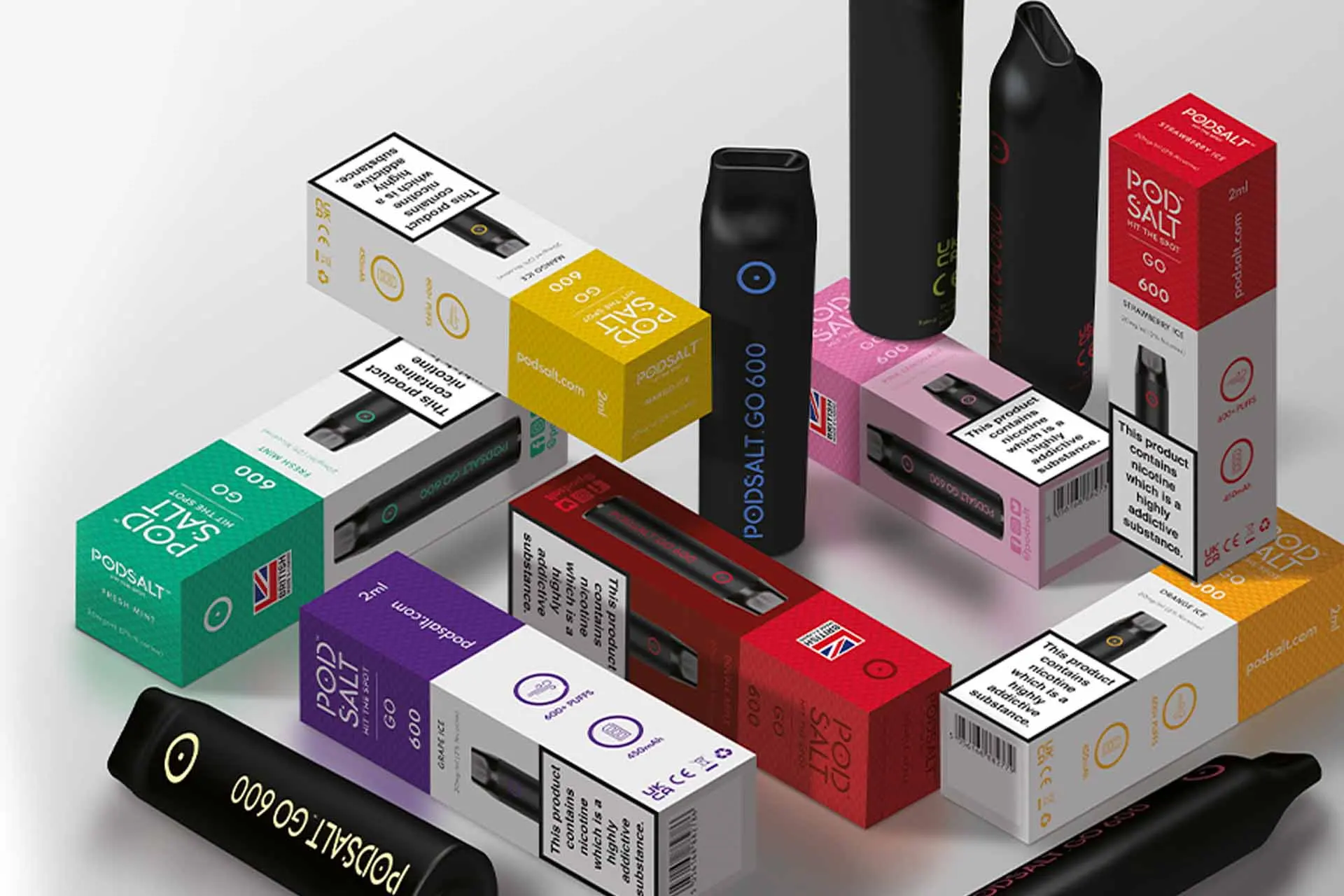
One of the most important corrections to older vape-law articles is to state the limits precisely. Section 14 of the TabakerzG says that nicotine-containing refill containers may hold no more than 10 ml, while nicotine-containing disposable e-cigarettes or disposable cartridges may hold no more than 2 ml. The nicotine-containing liquid may not exceed 20 mg/ml.
These figures are why global listings for devices advertised with 10 ml, 20 ml, 30 ml or larger reservoirs need careful scrutiny before they are treated as German retail products. A manufacturer may sell different configurations in different markets. A large-capacity product page outside Germany is not proof that the same liquid configuration can lawfully be sold to German consumers.
Retailers should therefore identify the exact SKU, not just the brand and model family. Check the reservoir or cartridge configuration, nicotine concentration, package language, importer or responsible economic operator details, batch information and the market for which the packaging was produced. If a supplier page says “TPD compliant” while simultaneously describing a nicotine disposable with a reservoir far above 2 ml, that contradiction requires clarification rather than a marketing assumption.
The statutory wording is available in TabakerzG §14. For terminology about concentration, see our nicotine-level guide; legal limits should not be confused with a recommendation for personal use.
3. Are nicotine-free vapes outside German vape law?
No. This is another common source of outdated information. BVL explains that Germany expanded the scope of its tobacco-product framework so that nicotine-free e-cigarettes and refill containers are also covered by relevant requirements. Youth-protection rules also expressly extend to nicotine-free e-cigarettes and e-shishas.
The exact obligations are not identical in every respect: for example, a nicotine-specific health warning is logically tied to products containing nicotine. But “0% nicotine” should never be treated as a blanket exemption from German product, notification, youth-protection, chemical-safety or electrical-product rules.
4. Minimum age for vaping in Germany: 18
The minimum age in Germany is 18. Jugendschutzgesetz §10 provides that tobacco products and other nicotine-containing products may not be supplied to children or adolescents in public, and the law extends these restrictions to nicotine-free electronic cigarettes and electronic shishas as well.
For retailers, the operational point is straightforward: age control must work in the real sales flow, not only in a website footer or an age-gate popup. The BVL specifically notes the need for a suitable age-verification system in cross-border distance selling. If a shop sells online, the business should review checkout, fulfilment and handover controls as a connected process.
Do not rely on an unsupported “check anyone who looks under 25” statement as though it were the statutory age threshold. Internal challenge policies can be stricter than the legal minimum, but the legal sales threshold itself is 18.
5. EU-CEG notification: six months before placing a new product on the market
BVL states that both nicotine-containing and nicotine-free e-cigarettes and refill containers are subject to notification requirements. For a new product, the notification is generally required six months before it is placed on the German market, using the EU Common Entry Gate, or EU-CEG.
The manufacturer or importer is normally the party making the notification, but retailers still need a defensible product-onboarding process. At minimum, the product identity in your catalogue should match the product and packaging you actually receive. A retailer should be able to distinguish a German-market SKU from a visually similar global-market version rather than treating a brand name as sufficient evidence.
Useful retailer checks before listing a new vape SKU
- Confirm the exact manufacturer, model and variant.
- Record the nicotine concentration and reservoir/refill volume from the physical packaging.
- Check that German-language consumer information and required warnings are present where applicable.
- Confirm the EU-based manufacturer/importer or responsible operator information required for the product.
- Ask the supplier for the relevant notification/product identity evidence rather than accepting a generic “registered” claim.
- Keep invoices, supplier records and batch identifiers so a listing can be traced back to the received goods.
For product notification details, use the BVL’s business FAQ on e-cigarettes and refill containers.
6. Cross-border online sales into Germany
Cross-border distance selling adds another layer. BVL says a company selling directly or online into Germany from another country must register with the competent authority in its home EU Member State and with the competent authority in Germany where required by the cross-border framework. A suitable age-verification system must ensure that products are offered and delivered only to customers who meet the legal minimum age.
This is important for wholesalers, marketplaces and stores using fulfilment partners. A technically compliant product does not automatically make a cross-border sales process compliant. Product law and sales-channel law must both be checked.
7. Vape tax in Germany in 2026: €0.32 per ml
Germany taxes “substitutes for tobacco” by liquid volume under the Tabaksteuergesetz. Section 2 sets the rate at €0.32 per millilitre from 1 January 2026, following €0.26/ml in 2025. The tax concept is broader than “nicotine tax”: the statutory category focuses on products suitable for consumption of an aerosol or vapour generated by a device, subject to the law’s definitions and exceptions.
| Period | Excise rate for substitutes for tobacco |
|---|---|
| 1 Jul 2022–31 Dec 2023 | €0.16/ml |
| 1 Jan–31 Dec 2024 | €0.20/ml |
| 1 Jan–31 Dec 2025 | €0.26/ml |
| From 1 Jan 2026 | €0.32/ml |
The current rate is set out in TabStG §2. Retailers importing or buying from another Member State should not assume that a supplier’s invoice alone proves the German excise position; tax stamps, movement rules and responsibility can depend on the supply chain. This is an area where tax advice may be appropriate for the business model.
8. Advertising and marketing restrictions
Germany imposes significant restrictions on advertising for e-cigarettes and refill containers. Older articles often over-simplify this into “all online marketing is banned” or, at the other extreme, assume that anything on a retailer’s own website is advertising-safe. Neither shortcut is a good compliance method.
Retailers should distinguish factual product information needed to operate an online shop from paid promotion, sponsorship, cross-border advertising, outdoor advertising and youth-oriented creative. The legal framework includes restrictions in the TabakerzG, and outdoor advertising rules for e-cigarettes have applied since 2024. Claims suggesting that a vape is harmless, healthy or medically beneficial also create obvious compliance and consumer-protection risk.
For content strategy, this article therefore uses neutral regulatory language rather than purchase persuasion. The goal is to answer Germany vape laws queries, not to turn a legal guide into an advertisement.

9. Where can you vape in Germany?
The federal non-smoker protection law now expressly includes electronic cigarettes. Under Bundesnichtraucherschutzgesetz §1, vaping is included in the smoking prohibition in covered federal facilities, public passenger transport and railway passenger stations, subject to the statute’s rules for enclosed spaces and designated smoking rooms or areas.
That federal law is not the whole answer for every restaurant, bar, office, stadium or local venue. Germany’s Länder have their own non-smoker protection rules, and property operators can impose house rules. A visitor should therefore check the rule for the actual venue instead of assuming that one nationwide sentence covers every indoor and outdoor place.
Our separate guide to vaping in public focuses on etiquette and venue-level checks rather than product-market legality.
10. Are disposable vapes legal in Germany in 2026?
As of 18 August 2026, we did not verify an enacted nationwide general ban that already prohibits all disposable e-cigarette retail sales in Germany. However, Germany has an active policy process aimed at restricting or banning disposable vapes, and the issue can change faster than evergreen product rules.
This distinction matters for search queries such as “are disposable vapes legal in Germany?” A political announcement that a ban will be prepared is not the same thing as an enacted prohibition with an effective date. At the same time, “not generally banned today” does not mean that every disposable vape on a global website is legal to sell in Germany. The exact product still has to comply with current German requirements, including the nicotine reservoir and concentration limits where applicable, notification, youth protection, tax and electrical-product obligations.
Retailers should re-check the legal status before major inventory decisions because this is a developing policy area. The environmental ministry has publicly supported a future ban while the current 2026 system also expands take-back duties.
11. New 2026 take-back duty for used e-cigarettes
Environmental compliance is now a central retailer issue. Germany amended the Elektro- und Elektronikgerätegesetz (ElektroG), and the transition rule required affected distributors of electronic cigarettes and heated-tobacco devices to establish take-back points by 30 June 2026. The federal environment ministry explains that from 1 July 2026, consumers can return used disposable e-cigarettes at sales outlets such as kiosks, filling stations and vape shops covered by the rule, and the return is not tied to buying a replacement device.
The practical message is simple: a disposable vape contains electronics and a battery, so it is not ordinary residual waste. A retailer’s compliance workflow should include collection, customer information and safe onward handling, not only the sale itself. See the federal environment ministry’s 2026 take-back guidance. The transition deadline is set out in ElektroG §46.
12. A retailer compliance checklist for Germany
- Identify the exact SKU. Do not onboard stock from a generic family name or supplier hero image.
- Check nicotine and liquid volume. For nicotine products, apply the 20 mg/ml, 2 ml disposable/cartridge and 10 ml refill-container limits correctly.
- Check German-market packaging. Review warnings, instructions, responsible operator details and other mandatory information.
- Verify notification status. Match the supplied product to the EU-CEG identity/documentation rather than relying on a generic brand-level statement.
- Confirm age-control procedures. Storefront, online checkout, fulfilment and delivery controls must support the 18+ rule.
- Review cross-border registration. Do this before selling from another jurisdiction directly to German consumers.
- Check excise handling. The 2026 rate is €0.32/ml; confirm tax responsibility and tax-marking requirements for the actual supply chain.
- Review marketing. Keep product information factual and avoid prohibited channels, youth appeal and health claims.
- Set up e-waste take-back. If your outlet falls within the 2026 ElektroG duty, maintain the required collection and information process.
- Monitor the disposable-vape policy process. A future ban could change procurement decisions even when current stock complies with today’s rules.
13. Red flags when evaluating a “Germany-ready” vape listing
- A nicotine disposable is advertised as both “TPD compliant” and as containing far more than 2 ml in a single disposable reservoir, with no explanation of a different compliant configuration.
- The page shows only a global nicotine option such as 3% or 5% while claiming the same unit is German retail stock.
- No exact model/SKU, importer or responsible-operator information can be provided.
- The supplier gives a certification logo screenshot instead of traceable product documentation.
- The German-language package shown in photos does not match the physical goods delivered.
- A seller treats nicotine-free products as exempt from all German notification or youth-protection rules.
- The price looks unusually low because German excise status is unclear.
A useful internal comparison is our guide to checking local vaping regulations. For technical product maintenance topics, keep them on separate pages such as our vape coil types guide; mixing troubleshooting, sales and German legal intent into one article weakens topical ownership.
14. Video: independent German consumer-protection context
The German Federal Institute for Risk Assessment (BfR) has published a consumer-protection video series and forum material on e-cigarettes. The playlist below is included for health and regulatory context, not as a product endorsement or a source for the legal limits in this article. For legal rules, use the statutes and authority pages linked above.
15. Frequently asked questions about vaping laws in Germany
Are vapes banned in Germany?
No general nationwide ban on all e-cigarettes is in force. Vapes are regulated products. Specific products can still be unlawful to place on the market or sell if they do not meet the applicable product, notification, tax, youth-protection or other requirements.
Are disposable vapes legal in Germany?
There is no verified nationwide general ban already in force as of 18 August 2026, but a future ban is an active policy issue. A disposable product must still comply with current German rules. For nicotine-containing disposable e-cigarettes or disposable cartridges, the liquid volume is limited to 2 ml and nicotine to 20 mg/ml.
How old do you have to be to buy a vape in Germany?
You must be 18. German youth-protection rules also cover nicotine-free e-cigarettes and e-shishas.
What is the nicotine limit for vapes in Germany?
For nicotine-containing e-cigarette liquid covered by TabakerzG §14, the maximum nicotine concentration is 20 mg/ml.
Can a 5% nicotine disposable be sold legally in Germany?
A product labelled 5% is commonly equivalent to about 50 mg/ml depending on how the percentage is expressed, which is above the 20 mg/ml statutory maximum for nicotine-containing e-cigarette liquid. Retailers should verify the actual concentration on the exact SKU rather than converting a marketing label casually.
What is the vape tax in Germany in 2026?
The excise rate for substitutes for tobacco is €0.32 per millilitre from 1 January 2026 under TabStG §2.
Do nicotine-free vapes need EU-CEG notification in Germany?
BVL states that notification requirements also cover nicotine-free e-cigarettes and refill containers, with notification required six months before placing a new product on the market.
Can you vape on trains and at railway stations in Germany?
The federal non-smoker protection law expressly includes electronic cigarettes in the prohibition covering public passenger transport and railway passenger stations, subject to the law’s rules on enclosed areas and designated smoking spaces.
Can German vape shops throw disposable vapes in normal rubbish?
Used e-cigarettes are electrical waste and contain batteries. The 2026 ElektroG changes expand retailer take-back, and the federal environment ministry explicitly says used disposable e-cigarettes should be returned through appropriate collection channels rather than residual waste.
16. Sources and editorial methodology
This update prioritises primary German legal and authority sources: the Tabakerzeugnisgesetz for product limits, the Jugendschutzgesetz for youth access, BVL guidance for EU-CEG notification and cross-border sales, the Tabaksteuergesetz for the 2026 excise rate, the Bundesnichtraucherschutzgesetz for federal public-use restrictions, and the ElektroG/federal environment ministry for 2026 take-back duties. EU Directive 2014/40/EU remains the underlying EU framework for nicotine-containing e-cigarettes and refill containers.
We deliberately removed unsupported claims that a particular wholesaler, brand or product is “fully compliant” without SKU-specific evidence. We also removed outdated terminology and AI-contaminated substitutions from the previous version. Regulatory information can change, especially the status of proposed disposable-vape restrictions, so businesses should confirm current requirements with the competent authority or qualified counsel before relying on this guide for a commercial decision.
Editorial note: last substantive legal review: 18 August 2026. This page is intended for adult readers and business compliance research. It does not encourage nicotine use and does not replace legal or tax advice.
Industry Knowledge Point: The Paradigm Shift in Vapor Delivery
Recent market data indicates a 22% shift toward devices utilizing sub-ohm mesh coil architecture. Unlike traditional wire configurations, modern mesh elements provide a larger surface area for heating the pre-filled formula. This results in superior thermal distribution, preventing dry hits, extending battery efficiency, and ensuring a consistent sensory profile from the first draw to the depletion of the reservoir.
1. Market Dynamics and Regulatory Compliance in Europe
Distributing disposable vapes within the European Union necessitates strict adherence to standardized manufacturing and safety protocols. Commercial viability is directly tied to regulatory compliance. Devices distributed through authorized channels must meet CE (Conformité Européenne) and RoHS (Restriction of Hazardous Substances) certifications. These certifications mandate that electronic components are free from restricted heavy metals and that the internal lithium-ion power cells meet rigorous thermal stability benchmarks. Furthermore, local directives dictate strict limits on internal reservoir capacities and mandate clear consumer warning labels. We ensure that our entire portfolio of disposable vapes aligns with these regional frameworks, mitigating legal and operational risks for our wholesale partners across Germany, Belgium, and the broader EU zone.2. Empirical Testing and Quality Assurance Methodology
To establish absolute trust and reliability in the products we supply, ELFVAPING relies on a rigorous, data-driven Quality Assurance (QA) framework. We do not simply pass on manufacturer specifications; we validate them through empirical testing protocols.Pneumatic Draw Simulation
Using automated mechanical inhalation simulators, we sample 2% of incoming batches to verify the advertised puff counts. Devices are tested under standard atmospheric pressure, drawing 50ml of vapor per 3-second interval, ensuring the internal capacity aligns accurately with the manufacturer's claims.
Voltage Retention Analysis
The lithium-ion cobalt (LiCoO2) batteries integrated into our hardware undergo multi-stage multimeter testing. We measure voltage drop-off during continuous operation to ensure the battery sustains optimal wattage until the formula reservoir is entirely depleted.
Thermal Stability & Leak Prevention
Devices are subjected to rapid temperature fluctuations (-10°C to 45°C) in controlled environmental chambers to simulate transit conditions. This validates the integrity of the silicone seals, guaranteeing that no seepage occurs prior to consumer unboxing.
3. Elite Brands Defining the European Landscape
Strategic procurement requires partnering with brands that invest heavily in Research and Development. The hardware landscape is dominated by manufacturers prioritizing ergonomic design, advanced heating elements, and consistent aromatic output. Below is an analytical breakdown of top-tier disposable vape brands available for bulk procurement.Bang Box Series
High-Capacity Output Models
Engineered for extended lifespans, Bang Box devices utilize integrated rechargeable Type-C interfaces alongside 850mAh base cells. Their proprietary mesh coil systems operate at 1.0 ohms, generating dense vapor clouds while preserving the integrity of their diverse aromatic profiles. This line is highly recommended for consumer demographics seeking longevity.
RandM Tornado
Adjustable Airflow Architecture
RandM Tornado differentiates itself through customizable pneumatic controls. The rotating base valve allows users to physically restrict or open the air intake, transitioning the device seamlessly from a Mouth-To-Lung (MTL) to a Restricted Direct-Lung (RDL) draw. Their RGB LED actuation indicators also serve as diagnostic tools for battery health.
Elf Box
Compact Efficiency Standard
Setting the industry standard for form factor, the Elf Box utilizes a unibody polycarbonate chassis that maximizes internal volume for the formula reservoir while maintaining a highly pocketable footprint. Powered by an intelligent firing chipset, it delivers a precise 3.6V output, ensuring the sensory delivery remains unchanged even at 10% battery capacity.
4. Technical Specifications Comparison
For inventory managers evaluating the technical merits of different disposable vape lines, the following matrix outlines the core engineering parameters that dictate device performance and consumer satisfaction.5. The Economics of Bulk Sourcing with ELFVAPING
Supply chain efficiency is the bedrock of profitable retail. By centralizing your procurement strategy through ELFVAPING, retailers unlock significant logistical and financial advantages. As the foremost authority and largest online wholesale platform for disposable vapes in the Netherlands, Germany, Belgium, France, Portugal, Spain, Poland, and Denmark, we have optimized the importation and distribution pathways.Optimize Your Retail Inventory Today
Partner with the leading European distributor. Secure top-tier hardware, benefit from our exceptional QA processes, and capitalize on highly competitive wholesale rates.
Purchase wholesale disposable vapes on our centralized platform at ELFVAPING.
6. Sustainability Protocols and Environmental Responsibility
The proliferation of high-volume electronics necessitates a strict approach to environmental stewardship. Modern disposable vape brands are increasingly designing their hardware to align with the European Union's Waste Electrical and Electronic Equipment (WEEE) Directive. ELFVAPING exclusively champions manufacturers implementing sustainable design choices. This includes the transition toward biodegradable exterior polymers and modular internal architectures that allow specialized recycling facilities to easily extract the lithium-ion power cells from the copper and structural plastics. Educating the end-consumer on proper disposal channels remains a critical responsibility for retailers across the EU.7. Expert FAQs: Navigating Disposable Vape Procurement
QWhat is the Minimum Order Quantity (MOQ) for activating a wholesale account?
At ELFVAPING, we have structured our procurement model to support businesses of all scales. Our MOQ is set at an exceptionally accessible 10 pieces. This allows for rapid inventory diversification and localized market testing.
QWhich regions are fully supported by your logistical network?
We operate as the premier wholesale platform specifically catering to the Netherlands, Germany, Belgium, France, Portugal, Spain, Poland, and Denmark. Our localized payment gateways (such as iDEAL for the Netherlands and Bancontact for Belgium) facilitate frictionless transactions.
QHow do you verify the technical reliability of the devices supplied?
Our robust Quality Assurance program involves batch sampling using pneumatic draw simulators, multimeter diagnostics for battery health, and thermal stability checks. This ensures every product performs precisely to its advertised engineering specifications.
QAre there scalable pricing models for higher volume acquisitions?
Yes, while our MOQ begins at 10 units, our tiered pricing algorithm automatically applies significant discounts as your order volume increases, ensuring high-capacity distributors maximize their retail margins.
40000 Puff Vapes
WASPE AIVIOU 40000 Puffs Double Tastes LED Screen Bulk Buy Rechargeable Disposable Vapes Wholesale
20000 Puff Vapes
Bang Box 20000 Puffs Vape Rechargeable Bulk Buy Disposable Vape Wholesale
60000 Puff Vapes
WASPE AIVIOU 60000 Puffs 3 Tastes in 1 LED Screen Bulk Buy Rechargeable Disposable Vapes Wholesale
15000 Puff Vapes
RandM Tornado 15000 Puffs Bulk Buy Rechargeable Disposable Vape Wholesale
100000 Puff Vapes
BANG LEADER STOLL 100K Four Tastes 100000 Puffs Quad Mesh Coil Disposable Vapes Wholesale Bulk Buy
100000 Puff Vapes
WASPE Four Tastes 100K Puffs Bulk Buy Rechargeable Disposable Vapes Wholesale
18000 Puff Vapes
JNR Falcon X 18000 Puffs Dual Mesh Digital Display Bulk Buy Rechargeable Disposable Vapes Wholesale
20000 Puff Vapes
Gazzbar Rocket 20000 Puffs Dual Mesh LED Display Bulk Buy Rechargeable Disposable Vapes Wholesale